



Blog / CDJR Car Services

The Impact of Regular Air Filter Changes on Your Car's Performance

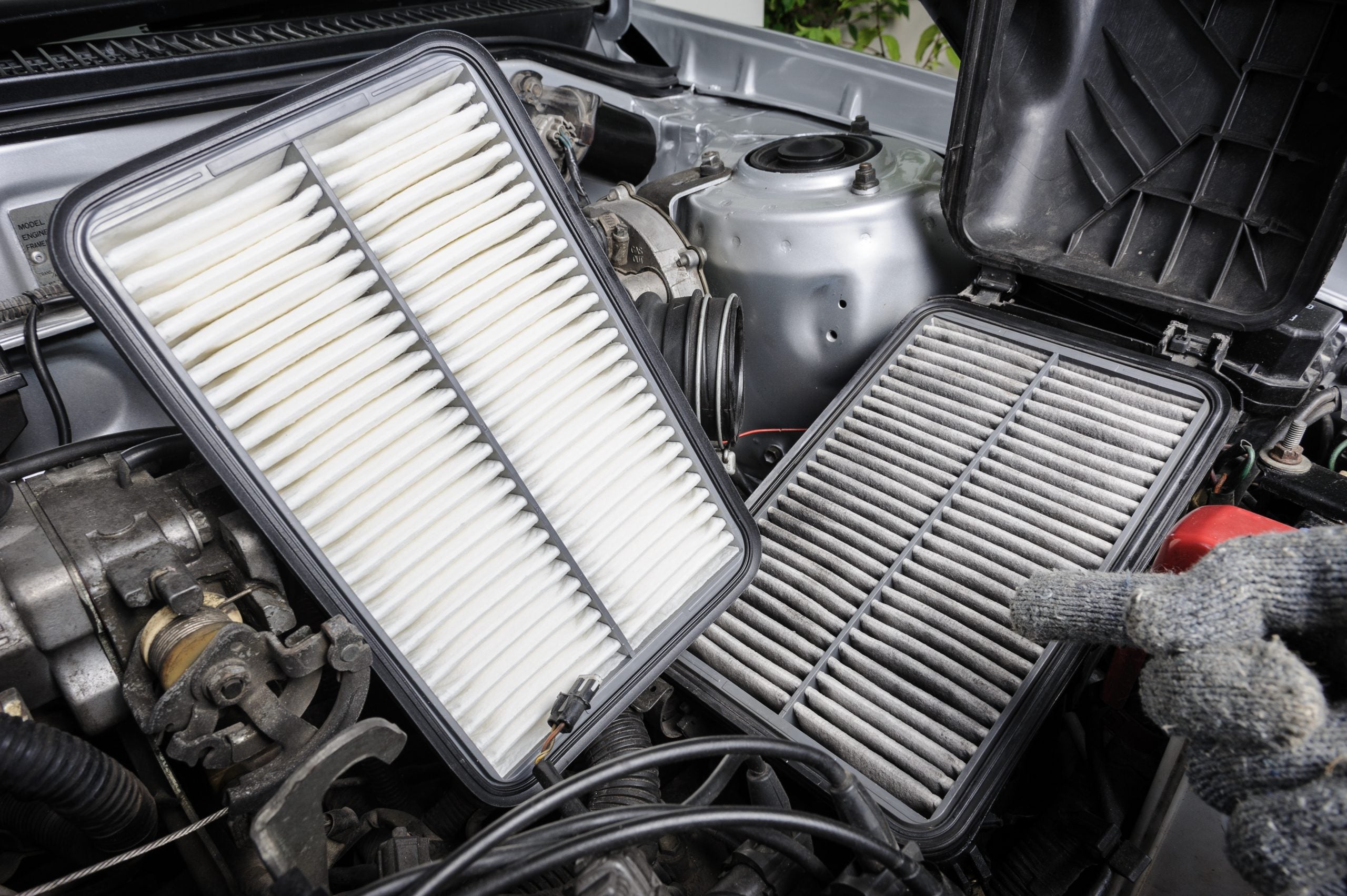
Comparison,Between,New,And,Used,Air,Filter,For,Car,,Automotive

A regular air filter change is imperative to trap contaminants, prevent dirt and debris from reaching the engine, and keep it clean. A clean filter will optimize your vehicle's performance, increasing fuel efficiency and reducing emissions.

Prolongs Your Engine's Lifespan

The primary role of the engine filter is to prevent harmful contaminants, such as dust, dirt, and debris, from getting into the engine and causing wear and, ultimately, damage to its parts. Replacing the filter at the intervals recommended by your vehicle's manufacturer will ensure your engine receives the right amount of clean air, optimizing your vehicle's overall performance. 

Improves Your Vehicle's Fuel Efficiency

Over time and with use, the filter becomes clogged with unwanted particles, blocking off clean airflow to the engine. When your engine doesn't receive an adequate amount of clean air, it has to exert more effort to produce power.

This means the engine will consume more fuel to compensate for the lack of air. Regularly replacing the old and dirty filter with a new, clean one will significantly reduce your vehicle's fuel consumption, saving you money at the gas pump.

Minimizes Your Vehicle's Emissions

A blocked filter will cause an incorrect air-fuel mix, allowing harmful contaminants to reach your engine. This can result in a misfiring engine, black exhaust smoke, difficulties starting your car, and increased emissions. To prevent engine damage and reduce emissions and pollution, ask your technician to replace the filter at the recommended intervals set out in your owner's manual.

Ensures Engine Efficiency

Adhering to the maintenance intervals and replacing the filter as recommended will prevent various issues under the hood and ensure your engine's efficiency. Regular filter changes will help you avoid a lack of clean airflow that will significantly reduce your vehicle's performance. A clogged filter could lead to a loss of power when you accelerate, rough idling, misfires, exhaust smoke, and difficulty starting your vehicle. 

Prevents Breakdowns and Expensive Repairs

Replacing a filter is a more cost-effective option compared to repairing problems resulting from a clogged and dirty filter. If the engine does not receive sufficient airflow, it can lead to soot fouling the spark plugs and the accumulation of deposits on the engine.

This will cause a range of issues, from shaking and vibrating to greatly reducing your vehicle's engine performance and increasing the risk of a breakdown. Fixing engine problems is costly, but simply replacing the filter before it becomes clogged will help you avoid engine problems and high repair costs. 

Replacing the filter at the recommended intervals will ensure your engine is performing at its best, lowering your vehicle's gas consumption and emissions. Call Madison Chrysler Inc. in Madison, CT, today for a filter replacement to keep your engine clean, protected, and performing optimally. 

Posted in:

Related Posts

how to take care of your car for summer in madison ct

Summer Car Care Tips: Preparing Your Vehicle for the Summer

While you're digging out your sunglasses and preparing for summer, it's important to remember your car also needs to be ready. As your CDJR dealership, we want you to know some of the summer car care checks we provide to keep your vehicle in great shape for the heat. more Coolant Check Coolant is one of the most important fluids in your vehicle. It's pumped through the engine at high speed to absorb engine heat. The now hot coolant enters the radiator, where the heat is removed by heat exchange with the outside air. Heat removal is essential to keep your engine working safely and efficiently, as excessively high engine temperatures can damage vital components. Over time, the coolant absorbs dirt, rust particles, and other minute debris during its travels through the engine. The accumulated junk causes the coolant to move more slowly, reducing its effectiveness and causing the engine temperature to rise. We'll test the coolant and replace it if necessary to ensure it keeps your engine temperature under control in the summer sun. Tire Inflation Checks Correct tire inflation reduces wear and tear on the tread, increasing your tire's lifespan. The right pressure for each of your tires is listed in your vehicle handbook. You can also find this information on a sticker or plate on the inside doorjamb of the front passenger door. Tire pressure will drop if a tire leaks, but it will naturally increase as the temperature rises. Tire pressure is measured in pounds per square inch (PSI). For every 10°F rise in temperature, the pressure inside each tire will naturally rise by 1 to 2 PSI as the pressure in the tires tries to equalize with the external pressure. This increase, coupled with the pressure inside the tires increasing as the air inside them heats up while you drive, could cause a blowout. Our technicians will examine your tires and adjust their pressure if required. AC Check No one wants to drive with an AC on the fritz in summer. Like all other systems, your AC requires regular maintenance to keep it working at its best. Parts will inevitably age and wear out, and this can prevent the AC from delivering the crisp, cold air you need to take the edge off the heat. We'll examine and test all the AC components to ensure they're working correctly. We also check the refrigerant level and test the pressure in the AC. Low pressure or lack of refrigerant could indicate a leak that needs to be found and sealed. Book your service today and get your Chrysler ready for summer. Contact our service department at Madison Chrysler Inc. in Madison, CT.

synthetic vs conventional oil

The Truth About Synthetic vs. Conventional Oil: Which Is Best for Your Car?

Whether you drive a high-powered truck, a family-friendly SUV, or a sporty sedan, it's important to schedule a routine oil change service to ensure your vehicle is in peak operating condition. Learn why synthetic car oil or conventional oil is best for your ride. Conventional motor oil is made from refined crude oil and serves the purpose of lubricating your engine to prevent damage caused by friction. Synthetic oil, on the other hand, is typically made in a lab and often has specific additives to enhance the performance of your vehicle. In general, conventional motor oil is used in gas-powered vehicles, especially older models, while synthetic oil is commonly found in newer models and performance vehicles. Key Facts About Conventional Car Oil Affordability is the biggest benefit of conventional engine oil. This motor oil is thicker and flows more slowly, so it's ideal for older or larger engines that need more lubrication to prevent damage. This motor oil will typically last for 5,000 to 7,000 miles. more Key Facts About Synthetic Car Oil Synthetic oil is formulated to reduce sludge buildup in the engine, resist heat damage to engine components, and have a thinner viscosity that flows more easily in the motor to improve fuel economy. Turbocharged engines perform ideally with synthetic oil, so many modern vehicles with eco-friendly motors use blended synthetic or fully synthetic motor oil. You can expect this oil to last up to 10,000 to 15,000 miles. When Should You Schedule an Oil Change Service? If your vehicle was made in the last few years or has a turbocharged engine under the hood, you can schedule oil service every six months or so. Older vehicles with larger motors may need oil service every three months to maintain ideal performance. For most vehicles, you should change your engine oil every six months since motor oil degrades over time, even when you don't drive your vehicle frequently. You should schedule oil service when the check engine oil light turns on. It's a good idea to book service in preparation for a long trip, after you return from a trip, or to weatherize your vehicle for seasonal changes. You should also schedule service if you notice unusual leaks, loud engine noise, smell oil in the cabin, or see excessive exhaust smoke. A change in gas mileage is also a sign that your vehicle needs fresh oil. Your owner's manual will indicate whether conventional or synthetic oil is best for your vehicle, as well as the recommended oil change interval to support your vehicle's performance. Get in touch with Madison Chrysler Inc in Madison, CT to book oil service today.

Shock and Struts Service

Are You Overdue? Hidden Signs Your Truck Needs New Shocks or Struts

When truck shocks or struts begin to wear out, the symptoms can start as subtle and rapidly become quite alarming and even hazardous. The earlier you have your suspension repaired with replacement parts, the smoother your drives will remain and the safer you'll be. With this in mind, here are seven key early warning signs that your truck struts or shocks need attention with prompt truck service in Madison, CT. Swaying When Cornering With worn suspension components, your truck might start to sway or even tip when you corner. Without firm shocks and struts maintaining a balance, the inertia generated when you corner will lower your truck on the outside of the turn, potentially posing a risk of tipping over. more Nose Diving When Braking When braking, your suspension needs to be exceptionally strong to resist the force of the truck's full momentum trying to push forward. Worn shocks and struts will no longer be able to resist this force, and your truck will start to nose dive before bouncing back to a stable position. Squatting When Accelerating Similarly, rapid acceleration may cause your truck to squat at the rear when the suspension has weakened. If you're hauling a heavy load, the malfunctioning shocks and struts will be under even more pressure, and the squatting may be worse. Bouncing After Bumps With a healthy suspension, your truck should glide over bumps and rough patches of the road smoothly. With worn suspension components, you may find the whole truck bouncing instead. Unevenly Worn Tires While checking your tires, if you notice they're wearing unevenly, the suspension could be to blame. With faulty suspension parts, the tires press against the road at awkward angles, which causes them to wear unevenly. Puddles of Leaking Fluid If you notice puddles of fluid under the wheel wells, it may be leaking from the piston housing in one of the shocks or struts. The leak will likely be accompanied by the other issues mentioned here. Less Responsive Steering When a strut wears out, all the connected components are impacted. This includes the ball joints and steering system. As a result, you may find that you can't steer your truck as precisely as before, which poses a clear danger to you and other drivers. How Long Truck Struts and Shocks Tend To Last You can expect your truck's shocks and struts to last from 50,000 to 100,000 miles. So if you're nearing 100,000 miles, you should consider having your suspension components replaced before they start to falter. Get Truck Service in Madison, CT, Today for Your Suspension If you even suspect your suspension of wearing out, it's wise to have it inspected at once by experienced truck technicians. We'd be happy to examine and replace your shocks and struts, returning your truck to smooth, safe handling once more. Visit Madison Chrysler Inc in Madison, CT, today to have your truck's suspension repaired or serviced by qualified professionals. We provide comprehensive vehicle services, whatever your truck needs.