



Blog / CDJR Car Services

Blog

All CDJR Car Services Madison Jeep Dealership Madison CT New Car Dealership New Jeep Dealership Madison Chrysler Dealer RAM Truck Dealership Madison RAM Dealership Hybrid SUVs Madison CT Routine Car Maintenance SUV Dealership Madison CT Madison Chrysler Inc Service Madison Chrysler Service electric SUVs Madison CT Electric Vechiles Hybrid Cars Madison CT Wagoneer SUVs
synthetic vs conventional oil

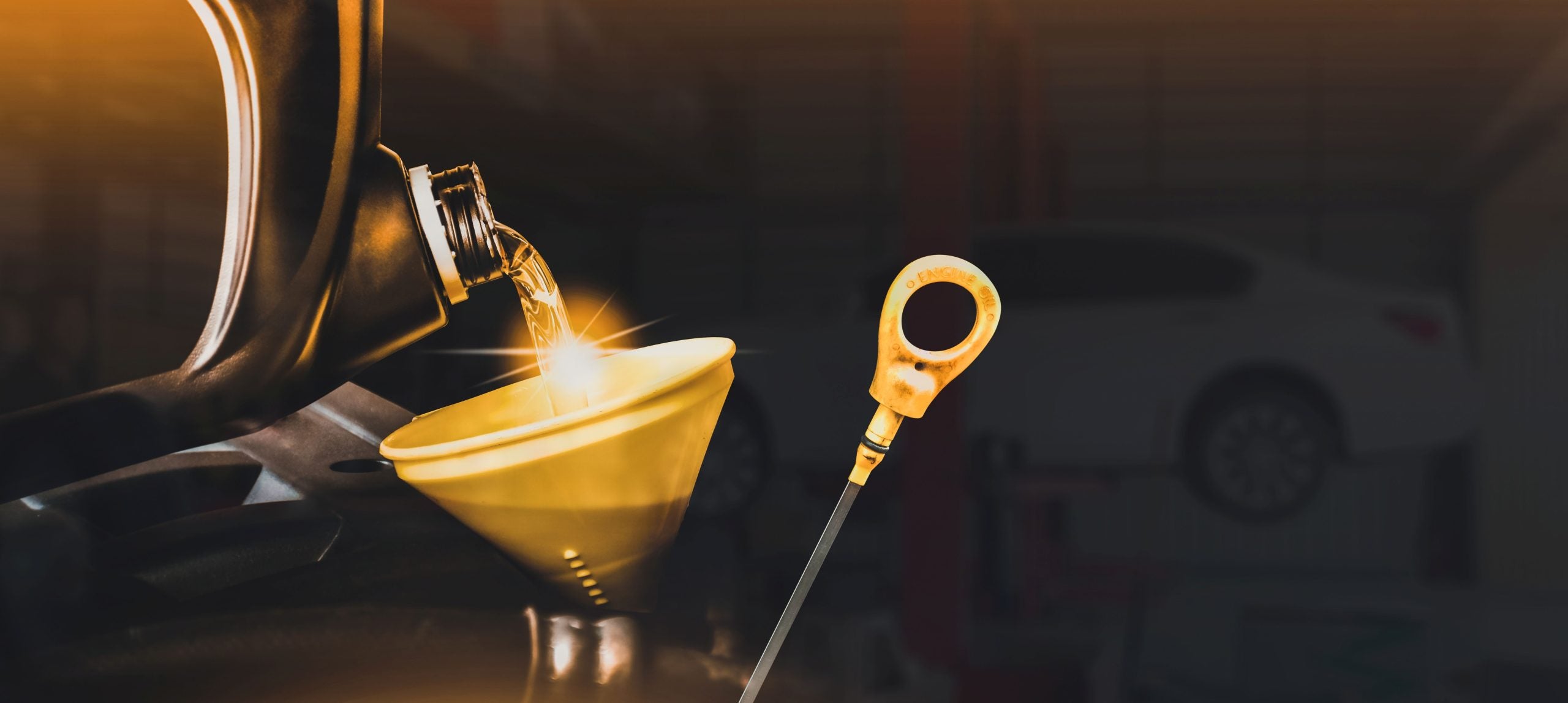
The Truth About Synthetic vs. Conventional Oil: Which Is Best for Your Car?

Whether you drive a high-powered truck, a family-friendly SUV, or a sporty sedan, it's important to schedule a routine oil change service to ensure your vehicle is in peak operating condition. Learn why synthetic car oil or conventional oil is best for your ride. Conventional motor oil is made from refined crude oil and serves the purpose of lubricating your engine to prevent damage caused by friction. Synthetic oil, on the other hand, is typically made in a lab and often has specific additives to enhance the performance of your vehicle. In general, conventional motor oil is used in gas-powered vehicles, especially older models, while synthetic oil is commonly found in newer models and performance vehicles. Key Facts About Conventional Car Oil Affordability is the biggest benefit of conventional engine oil. This motor oil is thicker and flows more slowly, so it's ideal for older or larger engines that need more lubrication to prevent damage. This motor oil will typically last for 5,000 to 7,000 miles. more Key Facts About Synthetic Car Oil Synthetic oil is formulated to reduce sludge buildup in the engine, resist heat damage to engine components, and have a thinner viscosity that flows more easily in the motor to improve fuel economy. Turbocharged engines perform ideally with synthetic oil, so many modern vehicles with eco-friendly motors use blended synthetic or fully synthetic motor oil. You can expect this oil to last up to 10,000 to 15,000 miles. When Should You Schedule an Oil Change Service? If your vehicle was made in the last few years or has a turbocharged engine under the hood, you can schedule oil service every six months or so. Older vehicles with larger motors may need oil service every three months to maintain ideal performance. For most vehicles, you should change your engine oil every six months since motor oil degrades over time, even when you don't drive your vehicle frequently. You should schedule oil service when the check engine oil light turns on. It's a good idea to book service in preparation for a long trip, after you return from a trip, or to weatherize your vehicle for seasonal changes. You should also schedule service if you notice unusual leaks, loud engine noise, smell oil in the cabin, or see excessive exhaust smoke. A change in gas mileage is also a sign that your vehicle needs fresh oil. Your owner's manual will indicate whether conventional or synthetic oil is best for your vehicle, as well as the recommended oil change interval to support your vehicle's performance. Get in touch with Madison Chrysler Inc in Madison, CT to book oil service today.

how to take care of your car for summer in madison ct

Summer Car Care Tips: Preparing Your Vehicle for the Summer

While you're digging out your sunglasses and preparing for summer, it's important to remember your car also needs to be ready. As your CDJR dealership, we want you to know some of the summer car care checks we provide to keep your vehicle in great shape for the heat. more Coolant Check Coolant is one of the most important fluids in your vehicle. It's pumped through the engine at high speed to absorb engine heat. The now hot coolant enters the radiator, where the heat is removed by heat exchange with the outside air. Heat removal is essential to keep your engine working safely and efficiently, as excessively high engine temperatures can damage vital components. Over time, the coolant absorbs dirt, rust particles, and other minute debris during its travels through the engine. The accumulated junk causes the coolant to move more slowly, reducing its effectiveness and causing the engine temperature to rise. We'll test the coolant and replace it if necessary to ensure it keeps your engine temperature under control in the summer sun. Tire Inflation Checks Correct tire inflation reduces wear and tear on the tread, increasing your tire's lifespan. The right pressure for each of your tires is listed in your vehicle handbook. You can also find this information on a sticker or plate on the inside doorjamb of the front passenger door. Tire pressure will drop if a tire leaks, but it will naturally increase as the temperature rises. Tire pressure is measured in pounds per square inch (PSI). For every 10°F rise in temperature, the pressure inside each tire will naturally rise by 1 to 2 PSI as the pressure in the tires tries to equalize with the external pressure. This increase, coupled with the pressure inside the tires increasing as the air inside them heats up while you drive, could cause a blowout. Our technicians will examine your tires and adjust their pressure if required. AC Check No one wants to drive with an AC on the fritz in summer. Like all other systems, your AC requires regular maintenance to keep it working at its best. Parts will inevitably age and wear out, and this can prevent the AC from delivering the crisp, cold air you need to take the edge off the heat. We'll examine and test all the AC components to ensure they're working correctly. We also check the refrigerant level and test the pressure in the AC. Low pressure or lack of refrigerant could indicate a leak that needs to be found and sealed. Book your service today and get your Chrysler ready for summer. Contact our service department at Madison Chrysler Inc. in Madison, CT.

Shock and Struts Service

Are You Overdue? Hidden Signs Your Truck Needs New Shocks or Struts

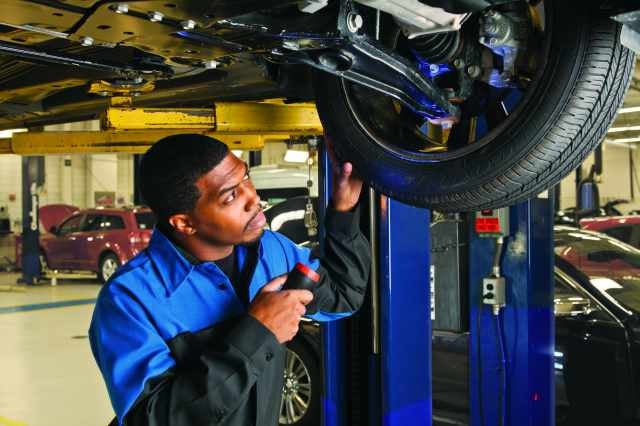
When truck shocks or struts begin to wear out, the symptoms can start as subtle and rapidly become quite alarming and even hazardous. The earlier you have your suspension repaired with replacement parts, the smoother your drives will remain and the safer you'll be. With this in mind, here are seven key early warning signs that your truck struts or shocks need attention with prompt truck service in Madison, CT. Swaying When Cornering With worn suspension components, your truck might start to sway or even tip when you corner. Without firm shocks and struts maintaining a balance, the inertia generated when you corner will lower your truck on the outside of the turn, potentially posing a risk of tipping over. more Nose Diving When Braking When braking, your suspension needs to be exceptionally strong to resist the force of the truck's full momentum trying to push forward. Worn shocks and struts will no longer be able to resist this force, and your truck will start to nose dive before bouncing back to a stable position. Squatting When Accelerating Similarly, rapid acceleration may cause your truck to squat at the rear when the suspension has weakened. If you're hauling a heavy load, the malfunctioning shocks and struts will be under even more pressure, and the squatting may be worse. Bouncing After Bumps With a healthy suspension, your truck should glide over bumps and rough patches of the road smoothly. With worn suspension components, you may find the whole truck bouncing instead. Unevenly Worn Tires While checking your tires, if you notice they're wearing unevenly, the suspension could be to blame. With faulty suspension parts, the tires press against the road at awkward angles, which causes them to wear unevenly. Puddles of Leaking Fluid If you notice puddles of fluid under the wheel wells, it may be leaking from the piston housing in one of the shocks or struts. The leak will likely be accompanied by the other issues mentioned here. Less Responsive Steering When a strut wears out, all the connected components are impacted. This includes the ball joints and steering system. As a result, you may find that you can't steer your truck as precisely as before, which poses a clear danger to you and other drivers. How Long Truck Struts and Shocks Tend To Last You can expect your truck's shocks and struts to last from 50,000 to 100,000 miles. So if you're nearing 100,000 miles, you should consider having your suspension components replaced before they start to falter. Get Truck Service in Madison, CT, Today for Your Suspension If you even suspect your suspension of wearing out, it's wise to have it inspected at once by experienced truck technicians. We'd be happy to examine and replace your shocks and struts, returning your truck to smooth, safe handling once more. Visit Madison Chrysler Inc in Madison, CT, today to have your truck's suspension repaired or serviced by qualified professionals. We provide comprehensive vehicle services, whatever your truck needs.

mopar car spring maintenance

Spring Car Care: Essential Maintenance Tips for Your Jeep, RAM, Dodge, or Chrysler

Rely on our car service in Madison, CT to prep your vehicle for the new season. You can get started with these key spring maintenance tips. Care for Your Battery Make sure your battery is ready for spring road trips, especially if you drive less often in the winter. Stop by for a battery health test by one of our experienced techs. We'll let you know if it's time for a replacement so you won't end up stranded. Maintain the health of a newer battery by regularly driving for at least 30 minutes so it has time to recharge. Look at the terminals about once a month to make sure they remain clean and corrosion-free. more Dive Into a Deep Clean Protect the vehicle's paint and carpet with a comprehensive clean. Start by thoroughly rinsing the entire body to remove dirt and road salt. Don't forget to tackle the underside, where debris tends to accumulate. Then, use a wet sponge with soap designed for cars to clean the body from top to bottom. Rinse off the suds and then dry the paint completely. For the interior, remove the floor mats first. Then vacuum or shampoo the mats, carpet, and upholstery. Repeat these steps regularly to prevent stains and dust buildup, especially if you have an open-air vehicle like the Jeep Wrangler. Check Your Tires Perform a quick tread test to see if it's time for new tires. Your tire should have at least 4/32 inches of tread for safe operation. Insert a quarter into the tread with Washington's head first. If the tread doesn't touch the top of his head, visit us for a tire replacement. Even if your tires are new, check the tire pressure and add air if necessary. Many vehicles have an automatic tire pressure monitor, or you can check the owner's manual for the recommended inflation level. Examine Your Wiper Blades When your windshield wipers cause streaks, switch out the old blades. You should also replace your wiper blades when the rubber shows wear. New blades boost your visibility during inclement weather. Schedule an Oil Change Make an oil change appointment if you're approaching the recommended service interval for your vehicle. Check your owner's manual if you aren't sure. While you're here, we'll also check the levels of your coolant, power steering, brake, and transmission fluids. If your vehicle has all-wheel or four-wheel drive, we'll add transfer case and differential fluid to the list. We're ready to service your Chrysler, Dodge, Jeep, or RAM vehicle with genuine manufacturer parts. Contact Madison Chrysler Inc in Madison, CT to schedule your spring maintenance appointment now.

jeep maintenance

3 Signs Your Jeep Needs Maintenance

Regular maintenance ensures your Jeep's systems always operate efficiently. It also reduces or prevents many repair costs, as our technicians can replace worn or damaged components before they fail and cause additional damage. As your Jeep dealership in Madison, CT, we'd like you to know some signs you need to visit us for Jeep maintenance. Leaking Fluids Your Jeep contains many different fluids that provide services ranging from cleaning your windshield to cooling the engine and ensuring your braking system works effectively. The most important of these fluids are brake fluid, oil, power steering fluid, coolant, and transmission fluid. Each fluid operates within its designated system, as mixing fluids can cause serious problems and even permanent damage. Fluids can leak due to worn seals or gaskets, damage to their system, and other issues. As a system loses fluid, it works less effectively and can even make driving dangerous. Low brake fluid, for example, can prevent the brakes from working and this will lead to an accident. If you notice any fluid leaking from your vehicle, contact us ASAP so we can trace and fix the leak. more Starting Problems When you push the start button, you expect to hear the sound of your Jeep's engine within seconds. If you hear a click-click sound or the sad-sounding noise of the engine trying and failing to start, something is very wrong. Most starting problems can be traced to an issue with the battery, alternator, or starter. The battery, for example, can wear out due to age, as its average life is only three to five years. It could also fail due to a worn alternator that can't recharge the battery, damaged wiring, or loose battery connectors. A damaged starter won't initiate the crank, and if the engine doesn't crank, combustion won't begin. Our technicians will investigate and repair the source of the trouble. Noisy Transmission A healthy transmission doesn't make any sound as its computer smoothly changes gears. Humming, buzzing, whining, or other odd sounds all mean there's a transmission problem. While the noises might not sound worrying when they start, a transmission problem will rapidly worsen and quickly cause serious damage, depending on its cause. These noises could be caused by worn or damaged gears, a worn solenoid, low transmission fluid, or broken transmission bands. Whining sounds could also mean the torque converter, the transmission section that connects to the engine, is wearing out. We'll examine your transmission and repair or replace the cause of the problem. If you'd like to know more about the types of maintenance we provide or to book your maintenance, contact us today at Madison Chrysler Inc. in Madison, CT.

fuel efficiency

How to Maximize Fuel Efficiency with Your CDJR Vehicle

Everyone wants to save money on car fuel, and you can enhance your fuel efficiency with a few of the following tips. 1. Use the Right Car Fuel While most modern cars can easily use the cheapest fuel available at the gas station, you'll actually get the best efficiency overall by making sure you're using the right fuel for your CDJR vehicle. Sometimes, E85 fuel results in lower efficiency, though not always. It greatly depends on your vehicle, what year it is, and what fuel it was designed to run on. Check your owner's manual to learn more. more 2. Keep Up With Maintenance The maintenance you do on your vehicle, particularly oil changes and swapping out oil and engine air filters, make a significant difference to your fuel economy. But the state of your tires, how your brakes work, whether the car is aligned and balanced, and even the quality of your transmission fluid can all influence your efficiency over time. Take your vehicle in to your CDJR dealer whenever necessary to get the proper maintenance. 3. Drive Smart Speeding and roaring off stops as quickly as possible waste fuel. You'll get the best efficiency driving at lower speeds and by building speed gently from a stop and slowing gradually whenever possible. Bear in mind, of course, that if you're at a crowded intersection with long lights that you should not annoy and delay everyone behind you who needs to get through by slowly coasting forward just to save a few cents. But whenever it's polite and possible, take it easy on that gas pedal. 4. Lighten Up Lots of us are carrying around a bunch of things in our vehicles that we don't actually need. We do this because it doesn't seem to matter: cars, trucks, and SUVs tend to have lots of room, so what's the harm in just leaving something in there? Every pound of weight that you carry in your vehicle diminishes your efficiency by a small percentage. You've likely noticed that you get worse gas mileage when every seat is full and the vehicle is loaded up with luggage, right? Even the things you're carrying around in trunk or between the seats matters, though. Take a look in your vehicle and make sure there isn't some junk in there, particularly heavy junk, that doesn't need to be riding with you on every errand. There are more things that can help you get the best efficiency out of your vehicle, and we can tell you more that will be specific to your make and model when you come talk to our factory-trained technicians. Come see us at Madison Chrysler Inc here in Madison, CT today.

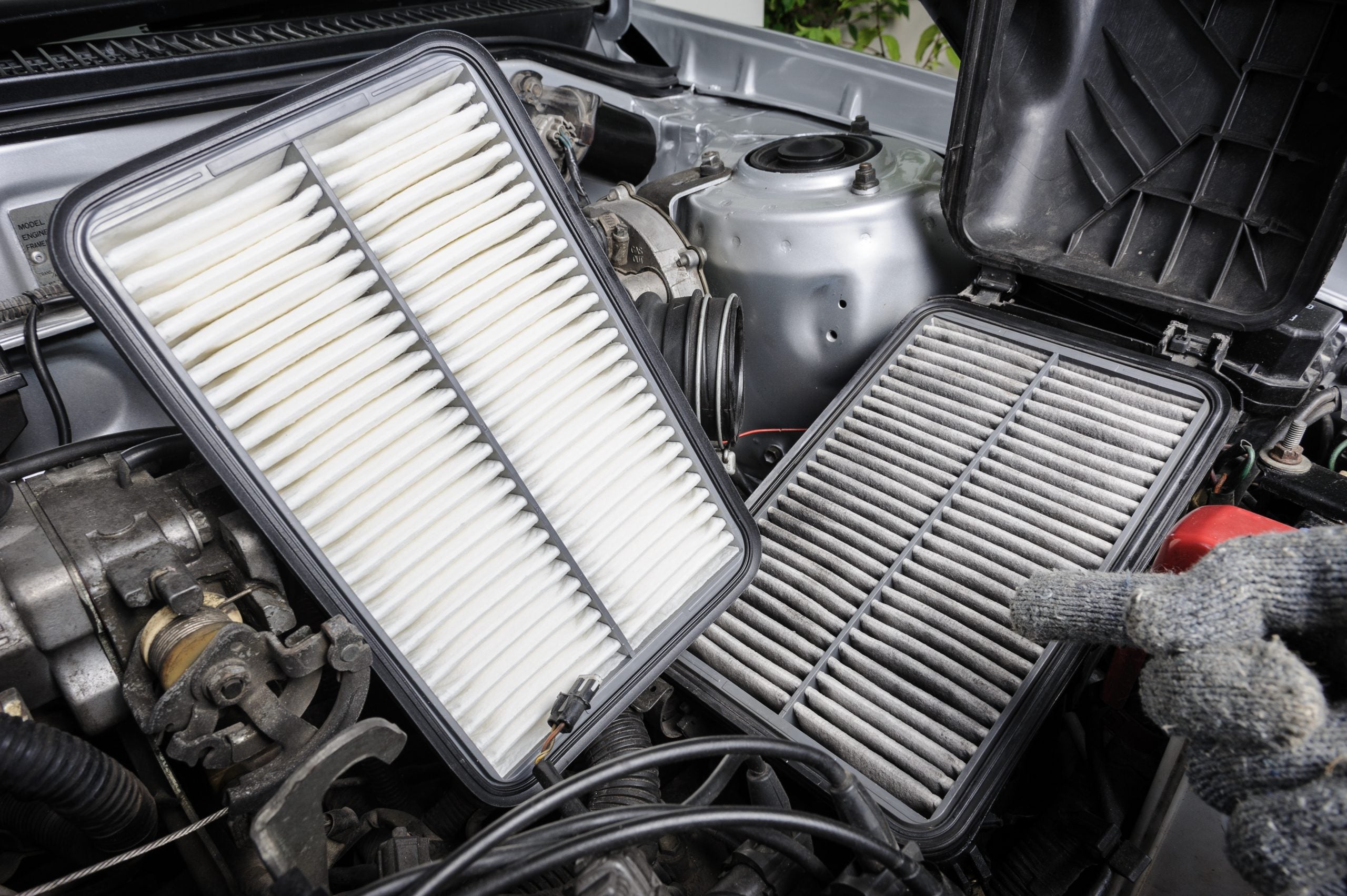
Comparison,Between,New,And,Used,Air,Filter,For,Car,,Automotive

The Impact of Regular Air Filter Changes on Your Car's Performance

A regular air filter change is imperative to trap contaminants, prevent dirt and debris from reaching the engine, and keep it clean. A clean filter will optimize your vehicle's performance, increasing fuel efficiency and reducing emissions. Prolongs Your Engine's Lifespan The primary role of the engine filter is to prevent harmful contaminants, such as dust, dirt, and debris, from getting into the engine and causing wear and, ultimately, damage to its parts. Replacing the filter at the intervals recommended by your vehicle's manufacturer will ensure your engine receives the right amount of clean air, optimizing your vehicle's overall performance. more Improves Your Vehicle's Fuel Efficiency Over time and with use, the filter becomes clogged with unwanted particles, blocking off clean airflow to the engine. When your engine doesn't receive an adequate amount of clean air, it has to exert more effort to produce power. This means the engine will consume more fuel to compensate for the lack of air. Regularly replacing the old and dirty filter with a new, clean one will significantly reduce your vehicle's fuel consumption, saving you money at the gas pump. Minimizes Your Vehicle's Emissions A blocked filter will cause an incorrect air-fuel mix, allowing harmful contaminants to reach your engine. This can result in a misfiring engine, black exhaust smoke, difficulties starting your car, and increased emissions. To prevent engine damage and reduce emissions and pollution, ask your technician to replace the filter at the recommended intervals set out in your owner's manual. Ensures Engine Efficiency Adhering to the maintenance intervals and replacing the filter as recommended will prevent various issues under the hood and ensure your engine's efficiency. Regular filter changes will help you avoid a lack of clean airflow that will significantly reduce your vehicle's performance. A clogged filter could lead to a loss of power when you accelerate, rough idling, misfires, exhaust smoke, and difficulty starting your vehicle. Prevents Breakdowns and Expensive Repairs Replacing a filter is a more cost-effective option compared to repairing problems resulting from a clogged and dirty filter. If the engine does not receive sufficient airflow, it can lead to soot fouling the spark plugs and the accumulation of deposits on the engine. This will cause a range of issues, from shaking and vibrating to greatly reducing your vehicle's engine performance and increasing the risk of a breakdown. Fixing engine problems is costly, but simply replacing the filter before it becomes clogged will help you avoid engine problems and high repair costs. Replacing the filter at the recommended intervals will ensure your engine is performing at its best, lowering your vehicle's gas consumption and emissions. Call Madison Chrysler Inc. in Madison, CT, today for a filter replacement to keep your engine clean, protected, and performing optimally.

car battery replacement in madison ,CT

Common Car Battery Issues and How to Prevent Them

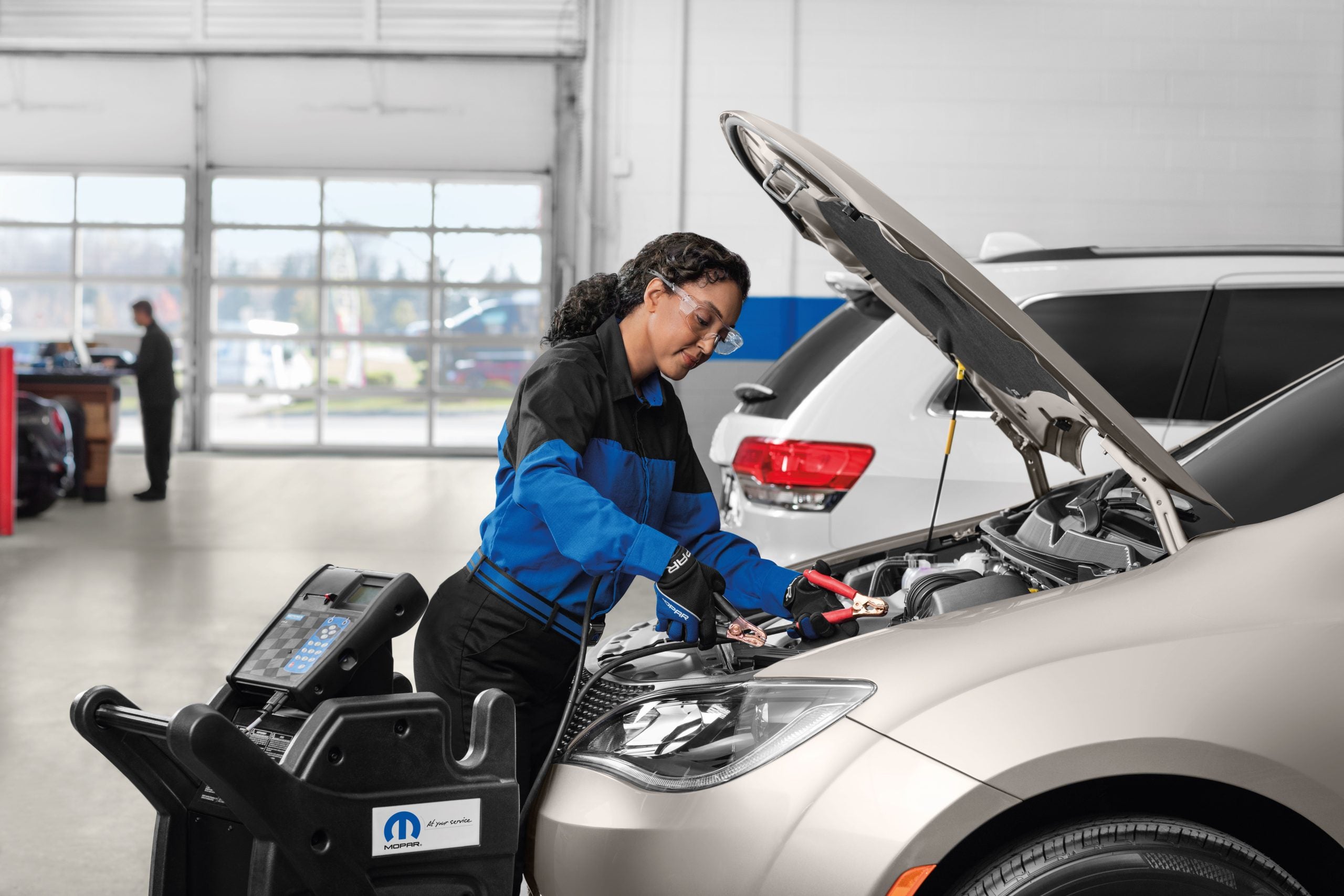
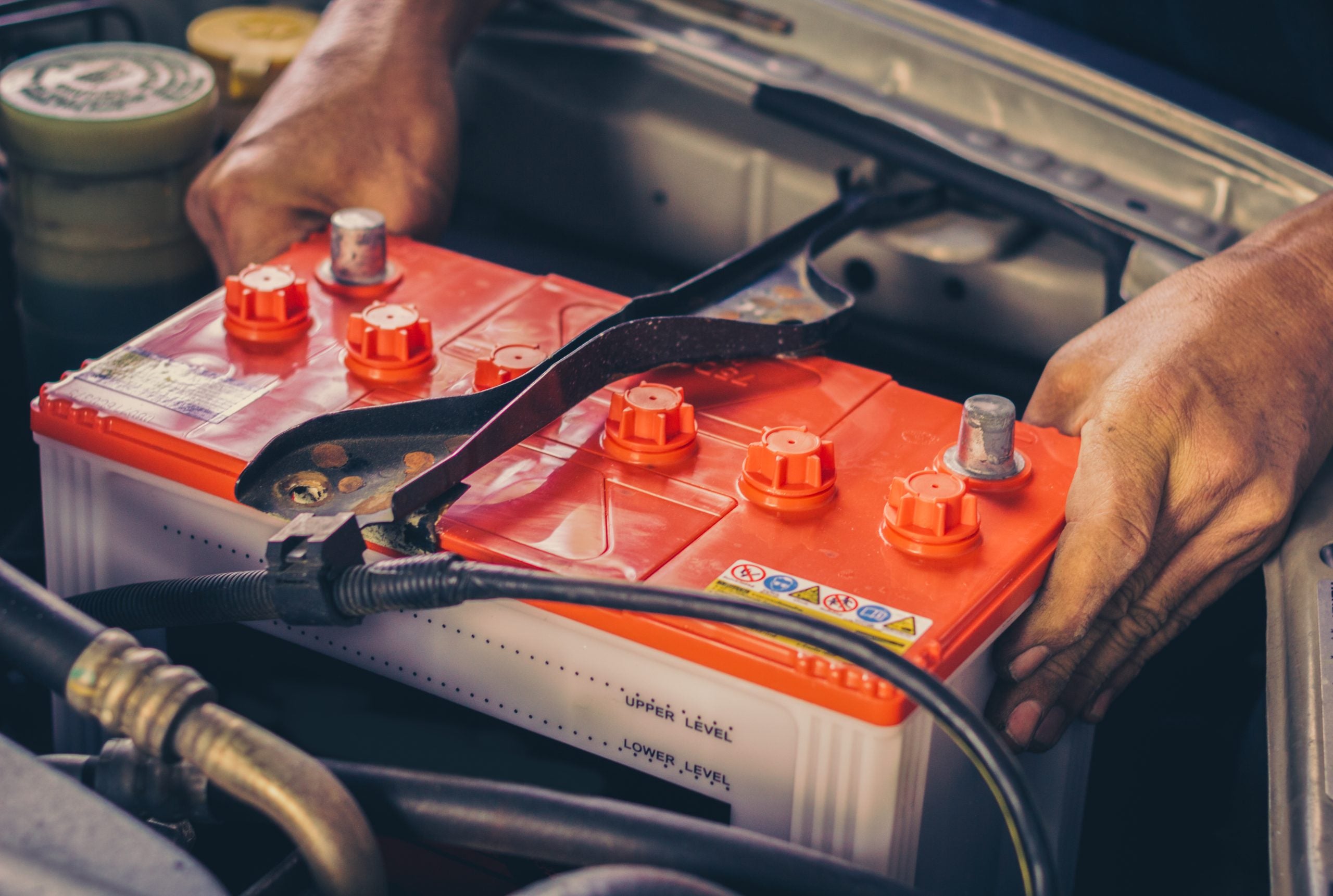
Factors such as extreme temperatures, vibrations, and damage will affect how well your car's battery works and how long it lasts. Below are several indicators to determine whether you need a car battery service or a battery replacement. Battery Age Batteries typically last three to six years. As they age, they gradually deteriorate, resulting in insufficient power to operate your Chrysler's electronics or start the engine. To prevent breakdowns, we advise having your battery tested annually by one of our Chrysler technicians if it's over three years old. If your battery is five years or older, replace it with a MOPAR battery, known for its dependable and long-lasting performance. more Extreme Temperatures Extreme hot and cold temperatures can damage your battery. High heat accelerates water evaporation from the battery cells, while freezing temperatures can diminish the battery's capacity. Temperature extremes can also lead to bloating of the battery case, exerting pressure on internal components due to gas buildup. This can cause the battery case to crack and allow hydrogen sulfide, which is acid and has a foul odor, to escape. Damaged batteries present a safety hazard and should be replaced promptly. Excessive Corrosion Watch out for signs of corrosion around the battery terminals, which could affect your battery's ability to conduct electricity. Remove the corrosion using a water and baking soda solution and a wire brush. However, if it's excessive, it could mean the battery is emitting acidic fumes or leaking battery acid. It's best to have your Chrysler technician inspect the battery to determine if it requires replacement. Charging Issues Your battery stores power and the alternator recharges it. A malfunctioning alternator can disrupt the battery's recharging process while the engine runs, causing your vehicle to rely solely on battery power. A failing alternator can overcharge the battery, potentially causing irreparable damage and a replacement. That is why scheduling regular maintenance services, including battery inspections and tests, is vital to ensure your vehicle starts every time. Weak Battery When your battery is weak, you'll notice the battery light go on due to the fluctuation in voltage. A weak battery spells trouble for your vehicle's accessories. Your headlights might dim, the radio might cut out, or the windshield wipers and windows might move slower. You might experience stalling or difficulty starting your car. Don't wait until it's too late. Replace your battery as soon as possible to avoid relying on help from a stranger and jumper cables to kick-start your engine. If you have to jump-start your battery frequently, it has reached the end of its lifespan, and even recharging it won't improve its longevity. If your battery is hindering your vehicle's performance, have it promptly inspected and tested to assess if a replacement is necessary. Visit Madison Chrysler Inc. in Madison, CT, today for professional service and a range of premium MOPAR batteries.

2024 Jeep Grand Cherokee L

Trim Levels of the 2024 Grand Cherokee L: Spacious Luxury Defined

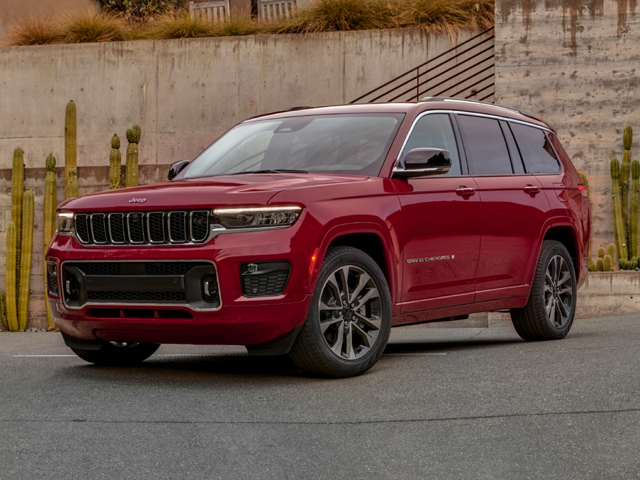
With three rows of seats and plenty of space for six, the 2024 Grand Cherokee L is the perfect adventure vehicle for families. Jeep offers it in eight trim levels, making it easy to select the right configuration for your needs and budget. Laredo Whether you need a big vehicle for your everyday commute or an affordable adventure companion, the base Laredo trim brings power and comfort. It comes in standard 4x2 drive and is powered by a 3.6L V6 engine that delivers 293 horsepower and a conventional towing capacity of 6,200 lbs. The six-seat configuration offers comfort and versatility, allowing for an easy expansion of the cargo capacity. more Laredo X The Laredo X model builds on the Laredo with exciting upgrades, such as a single-pane sunroof that adds brightness to the cabin, allowing you to enjoy more natural light or the night sky. In the 4x4 configuration, the available Quadra-Trac I with traction management system adjusts performance based on the driving conditions for smoother and safer rides. Altitude Focused on enhanced passenger comfort, the Altitude trim comes with leatherette-trimmed seating surfaces, heated front seats, and a heated steering wheel. A highlight is the upgraded Uconnect 5 infotainment system offered with built-in navigation, while a wireless charging pad adds convenience, making it easy to keep your smartphone charged. Altitude X The Altitude X comes with most of the Altitude's standard features, including the exclusive styling elements and leatherette-trimmed interior. A single-pane sunroof comes standard, while a remote vehicle start feature makes it easy to control various vehicle functions from a distance. Limited Designed to keep you and your crew comfortable in the cold Connecticut winter months, the Limited trim boasts heated front and second-row seats and a heated steering wheel. A larger center touchscreen comes standard, providing intuitive access to the various car functions and entertainment. Overland The Overland is designed to help you conquer new heights and comes in standard 4x4 drive. The Quadra-Trac II system with terrain selection and traction management pairs with off-road suspensions and greater ground clearance for smoother rides on bumpy roads. A hands-free power liftgate provides seamless access to the cargo area, while color-customizable ambient lighting allows you to personalize the cabin. Summit The Summit trim builds on the Overland, enhancing its features with 16-way power-adjustable front seats and convenient quad-zone temperature control. Advanced safety features include drowsy driver detection and perpendicular and parallel parking assistance. Summit Reserve Palermo leather-appointed seating surfaces and heated and ventilated front and second-row seats make the Summit Reserve trim perfect for drivers seeking in-cabin luxury. A standard 19-speaker McIntosh Premium audio system enhances the ride with crisp acoustics, while exclusive exterior styling elements create a distinctive road presence. Curious to discover more? Visit us at Madison CJDR in Madison, CT to take your favorite trim for a spin. We will be here to answer any questions you might have.

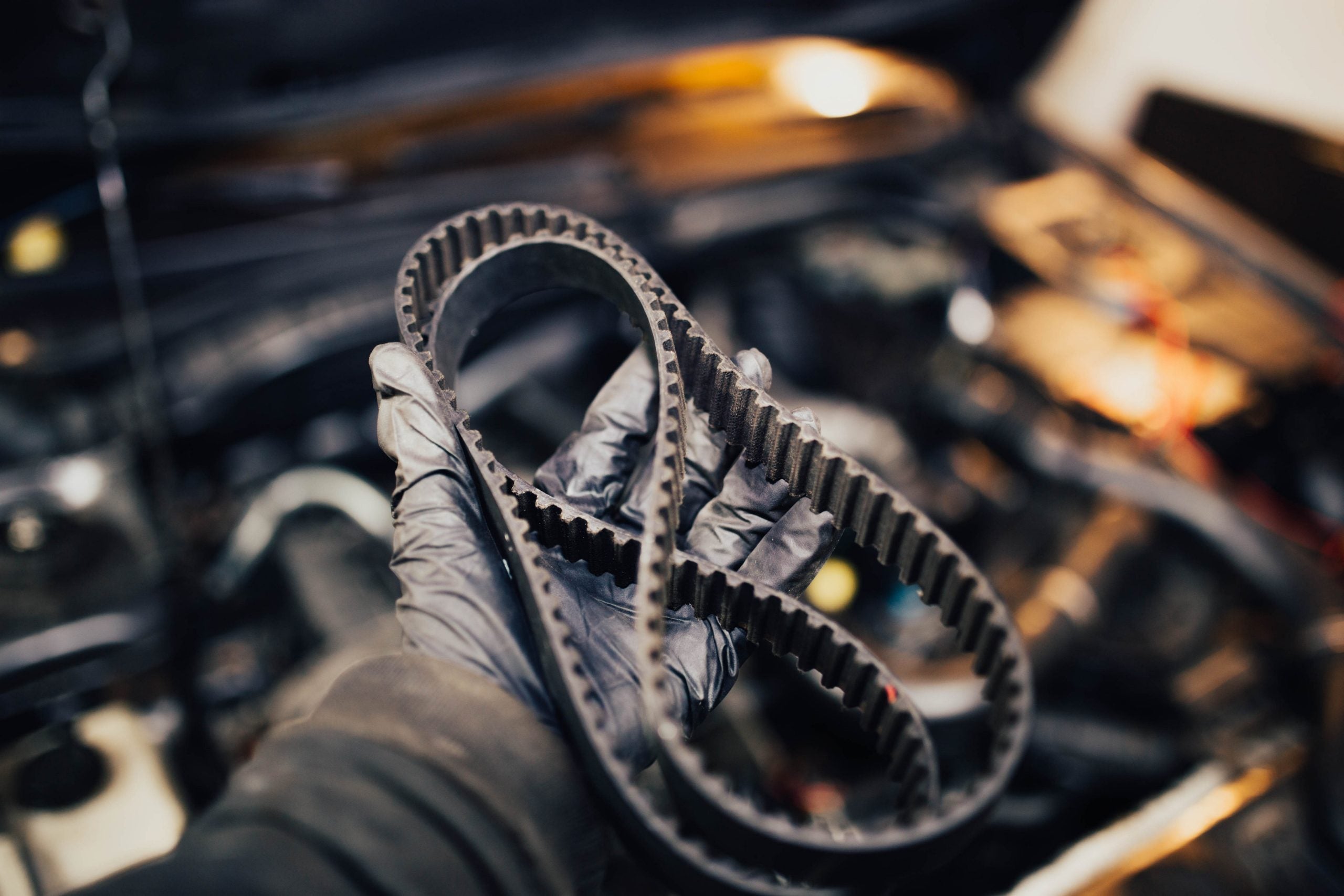
Automotive,Timing,Belt,In,The,Hand,Of,An,Auto,Mechanic.

The Importance of Timely Belt and Hose Inspections

There are many belts and hoses that are critical to the operation and function of your vehicle, which is why it is so important to get a car belt and hose inspection. Many of these belts are connected to your engine, providing power to the rest of the car. Car belt wear can cause the vehicle to stall, a loss of power, engine damage, and much more. Read on to learn more about car belt and hose care. When Should You Get a Car Belt and Hose Inspection? Checking your belts and hoses should be a part of your routine maintenance. The professionals at your dealership can check the belts and hoses inside the vehicle. The trained technicians at the service department can visually inspect the belts and hoses for misalignment, cracking, fraying, and wear. This can be done during your regular oil change intervals. more Car Belt Wear The belts inside your vehicle include, but are not limited to, the drive belt, timing belt, and serpentine belt. These belts are responsible for the power transfer from the engine to other components. When the belts are damaged, broken, or worn, you can have multiple systems fail, causing overheating, electrical malfunctions, loss of power, and more. The timing belt helps to turn the car's crankshaft and camshaft, keeping them in sync. Your car will not run at all without a timing belt. If you hear the belt break while you are driving, pull over immediately. During your regular maintenance checks, make sure the technicians let you know the condition of your timing belt. Depending on the wear and tear of the belt, you should have it swapped out every 60,000 to 100,000 miles. Car Belt and Hose Care Belts and hoses don't function in isolation. When these parts aren't working correctly, they strain the engine and can reduce the effectiveness of your cooling or braking system. The health of the belts and hoses inside the vehicle impacts the performance and many vital components inside the engine compartment. Regular maintenance will ensure they don't cause damage or other significant issues. Belts are engineered and built to last for roughly 60,000 to 100,000 miles. Your car's hoses should be replaced on average every four years. These numbers can go up or down depending on the vehicle, driving conditions, and even the climate where you live. The professionals at our CDJR dealership will be able to monitor the health of your car's belts and hoses and recommend appropriate replacement intervals. The belts and hoses inside your car are vital to the health and performance of your engine. Make sure they are in good condition. Call us at Madison Chrysler Dodge Jeep RAM in Madison, CT, to schedule your next maintenance appointment with the certified technicians in our service department today.

Closeup,Disassembled,Car,Automatic,Transmission,Gear,Part,On,Workbench,At

The Benefits of Routine Transmission Maintenance

Your vehicle's automatic or manual transmission transfers power from the engine to the wheels, allowing your car to move at various speeds. Routine car transmission service is of the utmost importance to ensure your transmission is functioning properly. Regular car transmission maintenance and transmission care improve gear function, fuel efficiency, and overall vehicle performance. Enhances Your Vehicle's Overall Performance A properly functioning transmission is vital for your vehicle's health and overall performance. Routinely changing the transmission fluid for proper lubrication and cooling and replacing the filter to trap harmful contaminants will regulate the temperature and prevent friction that can lead to overheating and premature wear. When the transmission is overworked, it puts unnecessary strain on the engine. Taking proper care of your transmission with regular maintenance enhances your vehicle's overall performance on the road. more Improves Gear Function Regular transmission fluid and filter changes keep the components lubricated and reduce friction, ensuring smooth gear shifts and efficient acceleration. When the transmission fluid is contaminated, it becomes thick and clogs the gears, causing hard shifting and premature wear of transmission components. Increases Your Vehicle's Fuel Efficiency Routinely changing the transmission fluid and filter will prevent the fluid from becoming contaminated. Dirty transmission fluid can turn it into sludge that will clog the transmission system. When the transmission components are well-lubricated, it prevents friction between the moving components that causes your engine to work harder. When your engine runs optimally, your vehicle's fuel efficiency increases, saving you money. Prolongs the Life of Your Transmission Routine maintenance can significantly extend the lifespan of your vehicle's transmission. By performing routine checkups and replacing the transmission fluid and filter at factory-recommended intervals, you can ensure the internal transmission components are well-lubricated. Proper maintenance reduces the likelihood of excessive and premature wear caused by friction between the moving parts, ultimately minimizing the risk of transmission rebuilds or replacements. Reduces Maintenance and Repair Costs Your transmission consists of numerous components that work together. When you take your vehicle for maintenance, the technician will thoroughly inspect your transmission, check the transmission fluid and filter, and replace them if necessary to ensure the proper functioning of your vehicle's transmission. With routine transmission inspections, the technician can identify and repair issues quickly before they escalate. Failing to adhere to the factory-recommended maintenance intervals increases the likelihood of transmission issues, which can be quite costly, particularly if the damage is severe. It's generally recommended that a transmission service be performed every 30,000 to 60,000 miles or every two years to experience the benefits mentioned above. Please refer to your owner's manual for the recommended maintenance schedule tailored to your model. Contact Madison Chrysler Dodge Jeep Ram in Madison, CT, today, and our certified technicians will ensure your transmission is in excellent condition.

wheel

The Benefits of Regular Tire Rotation and Wheel Alignment

When did you last have your wheels checked? Visiting a car tire service to align your wheels at least once or twice annually and rotating them every 5000–8000 miles can be a game changer. Regular tire maintenance also allows other parts of your vehicle, such as the suspension system and springs, to perform more efficiently. Here's why you need to make frequent visits to a tire car repair shop for tire rotation and alignment. Car Tire Service Extends Wheel Life Aligning your wheels prevents them from pulling to one side and experiencing friction. The mechanic adjusts the angle at which the rubber hits the road surface, allowing your vehicle to move in a straight manner. As a result, the rubbers last longer and save you the cost of buying new ones prematurely. Rotating your wheels prevents uneven friction that would leave them unbalanced. If the rear wheels are in better condition than the front ones, damage may occur to your vehicle's suspension system, due to vibration. Therefore, interchange the wheels often to improve the efficiency of the suspension system. more Tire Car Alignment Enhances Driving Experience Want a smooth, steady and balanced drive without constantly adjusting your steering wheel? Aligning your wheels will keep your automobile from drifting in the opposite direction. If your treads have bad alignment, your vehicle might glide in the wrong direction even though the steering wheel is in a center position. Additionally, wheels have a different wear rate because of the various functions they perform. For example, the front wheels play a huge role in maneuvering the vehicle in specific directions. Thus, the front rubbers have a shorter lifespan than the rear ones. An automotive technician moves the front wheels to the back and brings the rear ones to the front on opposite sides. Wheel Alignment Improves Road Safety Poor wheel alignment limits your control on the steering, which can put you in danger of crashing. By aligning and rotating your wheels, you can enjoy better acceleration and braking, which increases your safety on the highway. The treads, if properly aligned, will ensure your vehicle stays on the right side of the road, even when changing lanes. We encourage you to get those wheels aligned as soon as you can, to minimize accident risks caused by poor maneuverability. Plus, rotating the rubbers improves their road grip, allowing you to tackle sharp corners, drive on icy roads, and make hard stops without any fear. Do you need trusted experts to diagnose, align and fix your wheels or rotate your tires? Visit us today at Madison Chrysler Dodge Jeep RAM in Madison, CT, where we offer outstanding support and assistance. Our team of friendly, certified and trustworthy mechanics will upgrade your vehicle with impressive, road-worthy wheels.

Contact Us

Fill out this form below and we'll contact you shortly
*Required Fields